

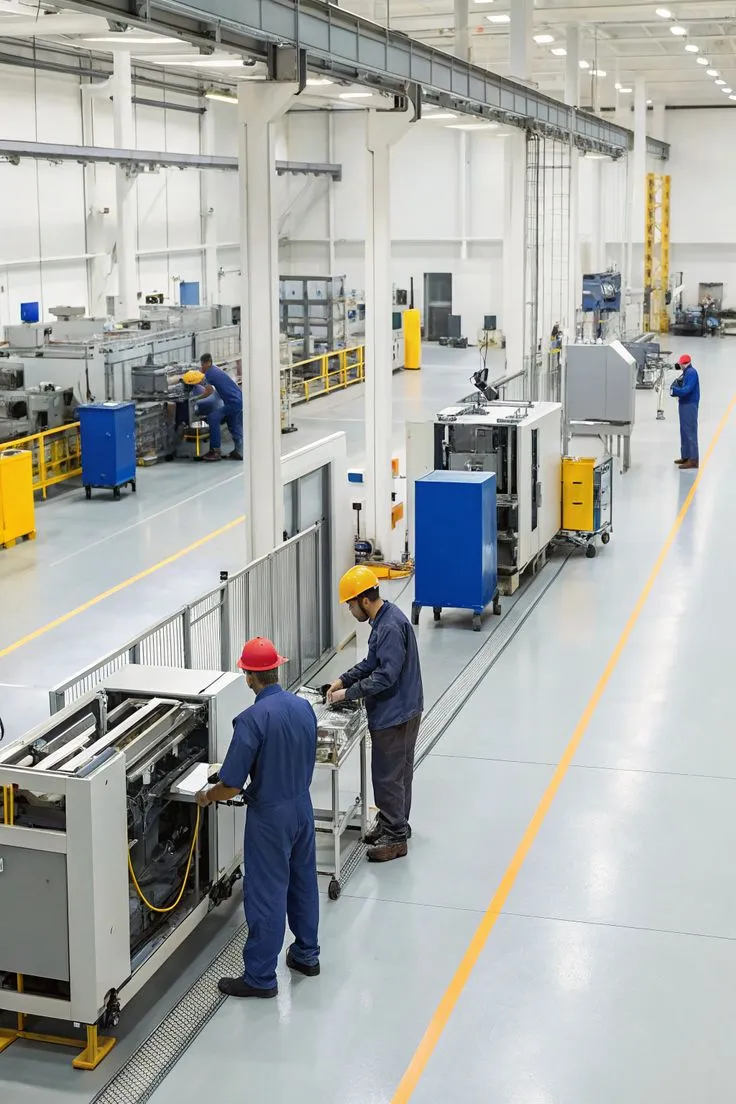
Manufacturing floors experience a combination of stresses that ordinary commercial surfaces rarely face. Heavy machinery, forklifts, cutting fluids, oils, dropped tools, metal debris, and repeated cleaning can all affect the same concrete slab. Damage often begins in specific production zones rather than across an entire facility. Understanding why these areas deteriorate first helps plant managers choose better repair priorities, improve maintenance planning, and select resinous flooring systems that match actual operating conditions instead of relying on a uniform coating everywhere.
Heavy Equipment Changes Load Patterns
Large machines place concentrated loads on relatively small areas of concrete. Presses, CNC equipment, production lines, and storage systems may remain in the same position for years, creating stresses that are very different from ordinary foot traffic.
The floor around these machines also receives maintenance activity, carts, tools, and occasional impact. If the concrete already contains weak areas or poorly repaired cracks, repeated loading can accelerate deterioration. Before resurfacing begins, equipment locations and slab condition should therefore be assessed together.
Forklift Routes Create Predictable Wear
Forklifts are another major source of concentrated floor wear. Straight travel lanes experience abrasion, while intersections and turning areas receive additional lateral forces as vehicles change direction.
Facilities considering Expert Epoxy Floor Installers Nj should ask how high-traffic routes will be evaluated before a system is specified. A production floor may require different preparation or build in forklift aisles than in lightly used storage sections. Treating every square foot identically can overlook the zones where mechanical stress is greatest.
Oils and Chemicals Need Early Attention
Manufacturing environments may expose floors to lubricants, solvents, coolants, process chemicals, or cleaning products. These substances can stain or deteriorate unprotected concrete and may affect unsuitable coatings over time.
Managers should document the materials most likely to reach the floor and how frequently spills occur. This information helps determine what chemical resistance is required from the resinous system and topcoat. Spill-response procedures also matter because even a resistant surface benefits from prompt cleanup rather than prolonged exposure.
Surface Preparation Determines Adhesion
A new resinous system can only perform as well as the concrete beneath it allows. Old coatings, oil contamination, dust, weak surface material, cracks, and moisture concerns can interfere with adhesion.
Mechanical preparation such as diamond grinding can remove unsuitable material and create a profile for the new system. Depending on the facility and substrate, additional repairs or moisture-control measures may also be needed. These preparation steps are easy to overlook because they disappear beneath the finished floor, yet they influence long-term performance far more than colour or gloss.
Production Downtime Must Be Planned
Floor work in an active plant requires careful coordination. Machines may need to be isolated, work cells temporarily moved, and material-handling routes redirected while sections are repaired and coated.
When reviewing a New Jersey Epoxy Flooring Service, plant managers should discuss preparation time, application stages, cure requirements, and when different levels of traffic can safely return. Large facilities may benefit from phased installation, but each phase still needs enough time for proper preparation and curing. Rushing the process simply to reopen an area faster can create avoidable problems later.
Texture Should Match the Work Zone
Not every manufacturing area needs the same surface texture. Dry assembly zones may prioritize easy cleaning, while areas exposed to oils, coolant, or washdowns may require additional traction.
More texture is not automatically better. Highly aggressive surfaces can trap debris and make cleaning more difficult. The practical goal is to balance traction with maintenance requirements, taking into account employee footwear, spill frequency, cleaning equipment, and the type of work performed in each zone.
Maintenance Should Follow Stress Patterns
Routine inspection is more effective when it focuses on predictable problem areas. Forklift intersections, machine perimeters, loading zones, joints, doorways, and chemical-handling areas deserve particular attention.
Small chips or coating damage can often be managed more easily before repeated traffic enlarges them. Maintenance teams should also record where repairs occur. If the same locations fail repeatedly, the pattern may indicate a substrate issue, inappropriate system choice, or operating condition that needs a broader solution.
Conclusion
Manufacturing floor deterioration is rarely random. Heavy equipment, forklift movement, impacts, oils, chemicals, and cleaning procedures create recognizable stress zones that often fail before the rest of the facility.
A stronger flooring strategy begins by identifying these areas and matching preparation, materials, texture, and maintenance to their actual demands. Rather than viewing the plant floor as one uniform surface, managers can prioritize the locations that carry the greatest operational stress. This approach can support more predictable maintenance, reduce recurring repairs, and create a flooring system better suited to long production cycles.